
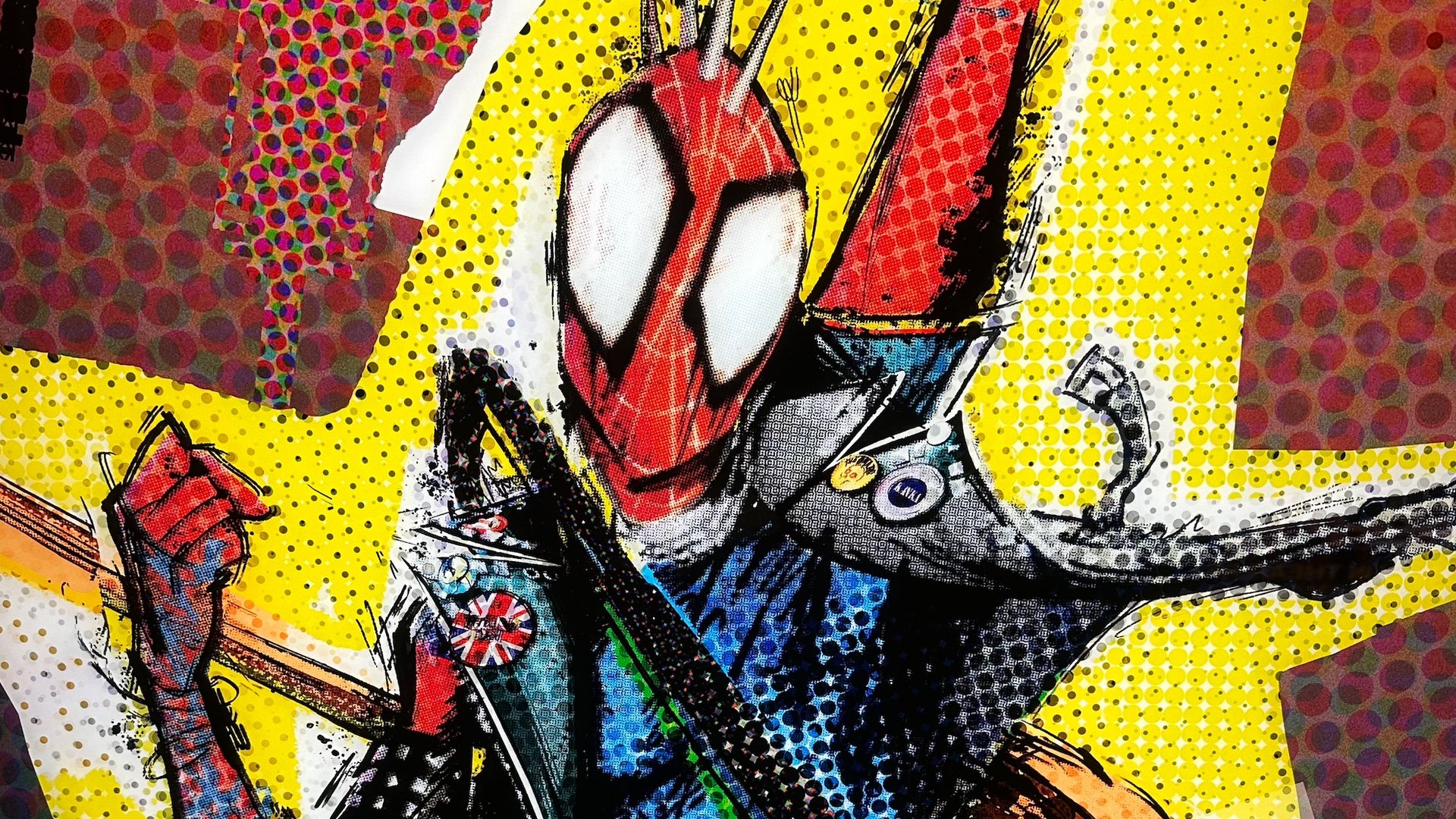
Before I discuss Spiderverse proper, I would like to establish the state of modern Hollywood in which it came out. I believe this is important context to understand how it’s so groundbreaking and why I love it so much. I will begin by talking about the current state of comic book movies, then multiverse stories and finally 3D animation before giving a brief reaction to Into the Spiderverse. Then, in the next entry, I’ll analyze Across the Spiderverse itself in detail.
A Confusing Mess of Mediocre Comic Book Movies
Everyone knows how awesome Spiderverse is…including me. Which is weird because I’m usually the last person who would sing the praises of the hundredth comic book blockbuster. I’m not a joyless snob who hates superheroes by any means, I just feel the genre’s been over-saturated for at least a decade and most of them tend to be poorly-crafted, assembly-line productions. Since roughly ~2010, it feels like Disney found a formula that works with their live action Marvel films and has clung to it like cold death, often to the detriment of each individual release. After so long, the quippy jokes from, say, Guardians of the Galaxy 2 (which I mostly enjoyed) began to undercut the drama of what should’ve been darker stories like the Infinity Saga (which I mostly didn’t). Not only that, but the constant need to raise the stakes led us from the grounded villain in Iron Man 1 (which I liked) to goofy space whales in Avengers 1 (which I hated) to over the top multiversal wackiness in phase 4, where I don’t even know or care what’s happening anymore. (They should’ve built up Galactus instead of Kang as the next big bad if you ask me, but I digress.)
Warner Bros has the same problem with DC but in the opposite direction; the realistic grittiness of The Dark Knight was great for its time, but building a whole cinematic continuity around that aesthetic gets outright depressing after so long. They decided to fit the square pegs of Superman (an optimistic boyscout), the Flash (a jolly wisecracker) and Aquaman (a walking punchline) into Batman’s bleak round hole, regardless of how it clashes with each hero’s respective pathos. WB sapped their universe of all the color and fun that makes comics exciting, same as they did for the increasingly terrible run of Harry Potter/Fantastic Beasts films, and inflated their runtimes into an exhausting 2.5-4 hours in most cases. The studio wanted so badly to rush into their own Avengers that they forgot to make us care about any of the individual characters along the way. Sony, meanwhile, has been trying to turn their relatively meager comic book holdings (the film rights to Spiderman) into their own expanded universe, just throwing random shit at the wall to see what sticks, with hilariously terrible results.
It’s all cynical, creatively bankrupt and outright dispiriting for someone like me who, while enjoying the occasional big dumb popcorn flick like anyone else, wishes there was more genuine artistry being produced to balance it out. Any time I bemoan the current zeitgeist’s obsession with these immature yet weirdly self-important blockbusters, I’m told I need to “turn my brain off and have fun” or “stop thinking and just enjoy things” which is fine every once in awhile…but it seems like we keep our brains turned off too much these days for my liking. Well-crafted stories which provoke deep analysis are important too, but we seem to have forgotten that against this wave of manufactured hype for mediocre products.
To be fair, a lot of the people who watch superhero movies just want a fun escape with exciting spectacles and passive entertainment, which is totally understandable. Some are like me, willing to appreciate the good in them as we find it but well aware of the flaws. However, the fanaticism and hyperbolic praise I see from large swaths of people is just not something I can understand. It’s like too many of us are languishing in a state of arrested development, still playing with our childhood action figures, simping for corporate brands, basing our whole identities on pop culture IP. A lot of people outright refuse to challenge themselves and bury any justified criticism of their consumerist idols with toxic positivity spearheaded by social media influencers with fake personalities. This is what I hate–not superheroes themselves but this whole phenomenon of grown adults, who should know better, making excuses for vapid cash-grabs because “muh nostalgia.”
My Thoughts on the Multiverse Trope That’s in Everything Now
I like the multiverse. It’s a fascinating idea, backed up by theoretical science, which opens up all kinds of possibilities for storytelling. However, it has the potential to overwhelm audiences with its infinite scale and could potentially destroy any stakes because “if X character dies or Y place is destroyed, we can just find another.” So, the best multiverse stories tend to be those which use the concept as a launch pad to explore the idea of choices, random chance and their compounding consequences on our lives over time. Arguably, Dan Harmon’s Rick and Morty was the first to take the concept to the mainstream, and the resulting “if everything is infinite, nothing matters because it’s all replaceable” brand of nihilism fits that show’s “edgy adult cartoon” vibe pretty well. Really, it only exists in that series to explain Rick’s cynical mentality, provide cool locations to explore and justify hilarious moments like the ending of “Rick Potion #9.”
The first and arguably best use of the trope I’ve seen came from “Remedial Chaos Theory,” an episode of Community. (Which was also created by Dan Harmon–he must really like the idea.) In it, the characters roll a dice to determine who has to go pick up some pizza, so the plot revolves around all scenarios which arise as a result of different people’s absence. The episode is really about exploring the interplay between our characters, how different the group dynamic would be if any one of them were not a part of it. In this way, we learn: 1) that Jeff’s need to be “cool” stifles everyone’s fun, 2) the group holds Britta’s weird self-sabotaging fetishes in check, 3) Abed balances everyone out who’d normally dislike each other, 4) nobody respects Shirley (or at least her hobbies), 5) Troy and Britta would get together if only they had more time alone, 6) Pierce is desperate to bring up an “impressive” anecdote, also 7) Jeff and Annie fit more naturally as a surrogate father/daughter relationship despite their flirtations with romance. It’s a grounded story about interrelationships that needed a high concept setup to pull off, and it remains the most fascinating episode of a sitcom I’ve seen. The infinite possibilities of the multiverse are held in check, used sparingly to explore the people in it, but there’s still a tease of how insane the possibilities can get with the darkest timeline ending.
That’s a good example of the trope done well and if you want a negative counterpart, just look at Marvel’s own Multiverse of Madness. Without getting into too much detail, I did love the shared struggle between protagonist (Dr. Strange) and antagonist (Scarlet Witch) in that story. Both are unhappy in the “prime universe” they live in, wanting to be with a certain woman or have kids (respectively) which just isn’t possible in our timeline due to circumstances beyond their control. Where Strange has toyed with the idea of using the multiverse to get his dream life before realizing it could destabilize all reality, Scarlet cannot let the temptation go, and thus our conflict begins. It’s a great setup but then the film gets bogged down in showing off its wacky CGI-laden dreamscapes which somehow look murky as hell. (Probably because the VFX industry is overworked to the point of collapse but that’s another story.) None of the characters are explored beyond that initial setup, they’re one-dimensional anyway, and the most interesting multiversal concepts we get are *checks notes* a universe where red means “go” and pizza comes in ball form. Gee wow, how creative, what possibilities. Oh, and Disney used the opportunity to remind us they own X-Men and the Fantastic Four now.
Spiderman: No Way Home and The Flash are no better, using this potentially fascinating plot device as a cheap gimmick to get old actors back and all in the same movie for nostalgia bait. With this output in mind, it’s no wonder people seem to be getting weary of the multiverse lately. I’ll admit my first reaction after hearing about Spiderverse was to roll my eyes for the same reasons. Meanwhile, the (in my opinion) vastly over-hyped Everything Everywhere All At Once made a valiant effort to embrace the possibilities of the multiverse and use it to explore character dynamics, but the execution was off. It’s another in a long line of recent films which I liked well enough at first but the more I thought about it afterwards, the more it broke down under scrutiny to where I started actively disliking it. I just bring this up to illustrate that the concept has been absolutely beaten to death by mid-tier movies, even outside the realm of comic books.
The Loss of Artistry in Modern Computer-Animated Films
Animated films have also been guilty of quantity over quality lately. I absolutely adore the medium, but I feel this accursed 3D trend has sapped all visual creativity from them over the last ~20 years. Pixar proved the viability of computer animation with their three ’90s releases (all of which I love), but my god, did every studio and their brother need to copy it ad nauseam for almost 30 years straight? Was it really beneficial for audiences to abandon a nearly century old tradition of hand-drawn, 2D cartoons? Yes, as some have pointed out, Walt Disney himself was an innovator and would’ve championed this new technology just as he always used the latest tools in his own films. (Including synchronized sound, technicolor, the multi-plane camera, the xerox process, blending live action with animation, etc.) I’m not against having computers draw pictures. What I am against is the goofy, blob-like, generic, uninspiring, utilitarian, sometimes outright hideous art styles the studios have decided must be our new perpetual standard. Just because computers can make realistic 3D models doesn’t mean you need to use them in every film. Animation is supposed to be stylized, colorful, expressive and do impossible things…but these so-called animators seem to have forgotten that.
3D animation, at least as it’s been used thus far, lacks the uniqueness or personality of the 2D classics and I will die on that hill. Nearly every individual Disney film from Walt’s tenure has its own distinct art design which makes them special, as does The Prince of Egypt, Don Bluth’s filmography, Watership Down, Miyazaki movies and especially Yellow Submarine. Yet you could almost take any character, from nearly every 3D film, from practically any studio, plop them in each other’s worlds and I’d bet nobody would notice. It all just looks the same, and I’ve lost interest in nearly every new animated release since the ’00s because of it. I mean, yes, I love Shrek as much as anyone and occasionally Pixar has a genuine banger like Finding Nemo or Coco, but I never watch these films for the actual illustrations and my enjoyment comes in spite of how boring I think they look. (Which is damning because the artistry is supposed to be the main selling point–it’s what sets animation apart from live action after all.)
Probably my least popular opinion regarding cinema is this: I don’t believe Pixar’s run of films is perfect, not even in the Lasseter days. A few great scripts aside, I never thought Pixar films looked especially good beyond the technical achievement, and after 100 helpings of the same corporatized 3D Cal-Arts style, I now actively resent the studio’s overall impact on the medium. Anytime I say this, CGI defenders feel the need to point out how many computers it took to render, the tomes of programming code used to realistically depict water effects, how it has a million individual blades of grass in each background shot, the processing power required…and all I can say to that is “what’s the point of wasting the resources of a small country just to make a crappy looking movie, when a simple pen and paper produces something far better at less cost?” I’ve yet to receive a satisfactory answer.
I believe the vast majority of these ’00s-’10s animated movies are destined for the dust bin as time goes on. They’ll occupy the same niche as Felix the Cat, MGM’s Happy Harmonies, Gertie the Dinosaur, Flip the Frog and Dave Fleischer’s filmography do for 2D animation. Which is to say, they’ll be a mostly forgotten historical curiosity, examples of a then-primitive artform’s first clumsy steps into the mainstream, but almost nobody will ever watch them for entertainment. I mean, really, does anyone actually remember Monsters vs Aliens, Hoodwinked or Over the Hedge even today–let alone enjoy them?
ASIDE: Of course, the same goes for superhero movies: when there’s a million of them, they’re disposable and forgettable. With a few standouts aside, I doubt anyone’s going to be praising the likes of Antman, Thor or The Suicide Squad years from now compared to the unwarranted accolades they’ve received in their own time, nor do I expect our grandkids to bother watching any of these mediocre Marvel shows from Disney+. It’s all just cinematic shovelware, and without the brand name no one would care.
A Ray of Hope in a Stagnant Industry
And then somehow, in this especially middling chapter of cinematic history, a much needed breath of fresh air appeared. I’m referring to Spiderman: Into the Spider-verse (2018), a film which unexpectedly blew me away. Despite being yet another comic book story, multiverse-explorer #37 and a dreaded 3D animated film, I could hardly remember the last time a new release managed to excite both the cinephile and inner child in me like that. More than anything, its art style was a long overdue alternate model to Pixar’s, as well as a proof of concept that 3D animation could be as beautifully stylized and surreal as Sleeping Beauty if only anyone were willing to take it there. Phil Lord and Chris Miller, who’ve made their bones on well-written, often experimental animation like The Lego Movie (which I also recommend) have proven that they are those people. They’ve earned a lifelong fan in me with Spiderverse; I’d even say they’re worthier successors to the Walt Disney legacy than anyone currently working for the mouse. Bob Iger, whom I’ve always regarded as an overrated and objectively terrible CEO, a monopolistic bully without any creative bone in his body, should be ashamed.
At a time when even Disney, the studio that popularized feature-length animation, seems embarrassed of the medium (if the live actions remakes are any indication) it’s just so cathartic to see someone else pick up the slack and make the kind of movie they could and should have done ~10 years ago if only they cared enough to try. Disney, despite being the most prestigious, well-funded and well-connected studio by far, with a century of accrued experience to draw from, has seemingly rested on their laurels the past decade (at least) while better artists surpassed them almost overnight. I’ve never been so happy to see a studio humbled before, and if they’re smart they’ll be taking notes from Sony going forward. They need to stop with these soulless factory farm productions with bloated $200 million budgets weighed down by executive oversight. It’s time to empower actual visionaries who challenge the limits of the medium, as Walt did his entire life. Instead of funding R&D at Pixar to determine how to animate “realistic” fire people who still ultimately look like shit, experiment with different art styles and new ways to use the computer as part of the process.*
*ASIDE: For example, my dream movie is one that uses the super-detailed watercolor paintings of Belladonna of Sadness but fully animated at 24 or even 30 frames per second. I’d like to see machines do the grunt work, freeing up animators to make more detailed key-frame illustrations for the computer to use as a model for generating the “blending frames.” Why can’t we make more stylized computer generated 2D films? Would that be okay, Disney? And don’t tell me that in the year 2023 we somehow still don’t have the know-how to make this happen. If that’s really the case then we’ve absolutely been allocating resources in the wrong places, trying to make incremental progress with Pixar’s “realistic” animation instead of a revolutionary new approach. If done well, I guarantee this design philosophy would blow most 3D films away.
An agonizing five years later, Lord & Miller managed to top themselves with Across the Spider-verse, an honest to God masterpiece by any definition, which has become my new favorite film of the entire 2000s, my new favorite superhero movie by far as well as my new favorite animated film, in 3D or 2D. Like, for real, I’d have to go all the way back to 2003 with the one-two punch of Pirates of the Caribbean 1 and LOTR: Return of the King to where I had this much fun watching a new release at the cinema. I’ve seen it in theaters four times now (tied with Toy Story 2 as the most I’ve ever done for a particular film), once on shrooms (which was magical) with more planned, just because I know it may be another two decades at least before a film this good comes along on the big screen again. I truly believe this is one of the greatest cinematic experiences of our time, the new indisputable gold standard for 3D as Pinocchio has always been for 2D, and the harbinger of a long overdue shakeup for the entire industry. Despite our impossibly depressing timeline, which is perhaps why the multiverse concept is so alluring to so many, genuine art like this makes me glad I’m still alive.
TO BE CONTINUED…


Hi Cassie,
Glad to see you are off to a good start with this project. Well written critique of current state of film industry. Looking forward to your analyses of the Acrosse the Spider Verse Film itself. I enjoyed seeing the film with you both times we watched it together and I’m sure it will be a good time when we see it again next week. I am glad you have found something that excites you so much and brings you joy!
LikeLiked by 1 person
I’m looking forward to the analysis as well. I do hope the hold-up is for positive and/or productive reasons. And I agree 100% with Ron’s last sentence. 🙂
LikeLiked by 1 person