
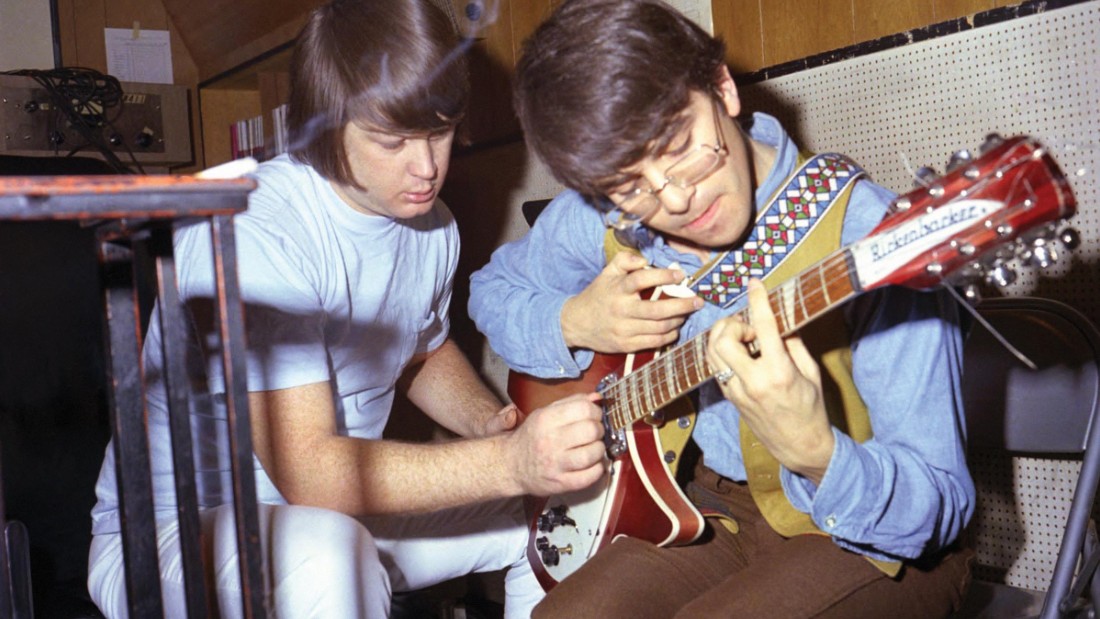
Let this “chapter” of my SMiLE analysis serve as an outline for what I think the project’s structure would have been if finished on time. The future installments of this series will back up these hypotheses with observations from the tracks, outtakes and postmortem interviews.
What Was Brian Going For (in Nov-Dec ’66)?
There are some people who don’t believe answering this question is even relevant anymore. They would argue that since Brian released the music in some form with the ’04 solo album as well as ’11 boxset that the man has spoken and the subject is closed. They would argue that there was no plan in ’66 because Brian was too scatterbrained to think that far ahead. I can understand those sentiments to some extent, but personally I still consider discussing the original plans (however tenuous and malleable they may have been) to be of great academic as well as artistic importance. The classic line used to shut down this kind of discussion is “the plan changed every day so it’s impossible to determine!” and I think that’s true in some capacity. (IE, the SMiLE of Summer-Fall ’66 is certainly different from Winter-Spring ’67 when the original outline was clearly in flux.)
For me, the crucial piece of evidence in favor of there being a true outline of the project worth reconstructing is this. Vosse describes SMiLE as existing as a fully conceptualized whole in Brian’s mind around Nov ’66 in his all-important articles. Up to that point progress had been steady, with Brian more or less knocking out track after track, more than enough material to fill a standard LP of the time. Things changed for sure, like the album name and perhaps the inclusion of the humorous skits (more on these later). Certain details like where to put the “Barnyard” and “I’m in Great Shape” fragments were still up in the air. A definite track sequence wasn’t decided upon. All that aside, I would bet that if one were to peak in at the Pet Sounds sessions, or even the vast majority of album sessions from most bands in general, you’d find a lot of the same malleability of track name, sequence and perhaps even song structure if in a lesser severity than what plagued SMiLE. Using the “extra tracks” like “Look” and “Holidays” as evidence for how unfocused these sessions were is misleading considering many albums have outtakes–including Pet Sounds with “Trombone Dixie,” “Little Girl I Once Knew” and even “Good Vibrations.” That’s just part of the process most of the time, same as how all films have hours of b-roll footage.
I don’t think the sessions became chaotic and self-conflicting until January of 1967, when many other tracks’ best moments become fodder for making “Heroes” work as a catchier, radio-friendly single. Work on the main tracks mostly ceased in service of possible singles (Heroes, Vega-Tables) and rerecording other material presumably for B-sides (the new versions of Wonderful, Love to Say Dada.) People use the confused 1967 sessions to color what had come before in 1966 which isn’t accurate. The truth is the singles consumed the rest of the album because either Brian didn’t know how to make them consumer-friendly and/or he was distracting himself from working on the album to buy time or because it was starting to become too much of a hassle. (Anecdotally, I’ve procrastinated on finishing several series of this blog–this SMiLE dissection included–but that hardly means I had no plan for them or there was no structure intended.)
Why would Brian put this monumental album on hold? I would argue it was a combination of writer’s block, doubt and emotions. Van Dyke Parks (VDP) left for the first time in December 1966. Brian second-guessed and shelved the Elements track in December. The Beach Boys came back from touring around then, and presumably it was about December when their misgivings towards this new music of Brian’s were delivered to him. So all these factors harmed Brian’s ability to finish SMiLE as well as his confidence to try. For all intents and purposes, the album was already dead at this point. Brian was spinning the wheels trying to get inspired for how to make sense of this mess he’d gotten himself into and it just never happened. Eventually the emotions associated with the project (possibly feeling betrayed by both VDP and the Beach Boys for not sticking it through or “getting it” respectively) were the cherry on a shit sundae.
For all these reasons, I choose to use that crucial Nov-Dec ’66 window as my launch point for how to understand SMiLE and how to sequence my fan mixes. In my opinion it’s the last time Brian had any kind of overarching concept of what this project would be before it imploded. (That said, I do use material from the sessions beyond this time–good music is good music and why ignore what’s there as long as it can fit into the same framework?)
How Should SMiLE Be Finished Today?
First of all, I prefer a simpler 12 or 13 track arrangement, not the 17-20 tracks that were on Brian Wilson Presents Smile (BWPS), the ’11 boxset or some “everything and the kitchen sink” mixes I’ve seen. It’s much more likely that this is the way Brian intended it to go at the time, it’s more like what 60’s albums actually were, and I think it makes the music more accessible that way. I also don’t like having short fragments as tracks. (Barnyard shouldn’t be a standalone, for example, as it just breaks up the pacing for an inferior piece of music. This is how you get mixes that are less than the sum of their parts.)
Going off of that, I prefer to use the 12 tracks that were written on the December tracklist submitted to Capitol records. Whoever physically wrote the tracklist aside, nobody would have submitted it without Brian’s approval. Therefore, as of Dec ’66, the last time the album had a chance of being finished, that’s what was in Brian’s head. Sometimes I cheat and use part of “Holidays” as a section of “Wind Chimes.” Or maybe I’ll use a fragment like “With Me Tonight” as part of “I’m In Great Shape.” Once or twice I’ve left IIGS off and used “Look” as the 12th track. But, generally speaking, I think we can assume those 12 songs on the Capitol list are the gist of what the album was going to be. Stuff like “Look,” “Holidays,” “Dada” and “You’re Welcome” were almost certainly not going to be included. They clearly don’t have the same thematic bridges, nor the same amount of meaning put into them. They’re nice bits of music but there are worthier tracks to include, and to force everything on the album leaves it a bloated mess. (Plus, LPs of this time rarely went beyond 40 minutes in length–something had to get cut.)
I firmly, strongly, 100 percent believe in a “2-suite” structure as opposed to the 3-suite structure of BWPS and the boxset, or the more formless mixes I’ve heard. I think it sounds better, and I think it’s more thematically consistent that way. There’s quotes of Brian saying it was going to be a two movement cantata back in the day. And when BWPS came out, he said “we ADDED a third movement” implying there had already been two. This works with the vinyl format he would have been working with, where two movements would fit quite nicely while three means splitting a side in half or adding a whole other disc. (And double albums were rare, though not unheard of, in this era especially for the Beach Boys.) Brian had already done something similar with the Today! album, where the upbeat rockers were on one side and the somber ballads on another.
Where I differ with a lot of other 2-suite mixers is I don’t believe in an Elements-themed side. The evidence is far more compelling for a “reflections on America/society” and a “reflections on life/individuality” format. An extroverted and an introverted trip. Contemplating what’s beautiful and what’s awful about the world around you and then turning that analysis inwards. That structure, to me, makes far more sense and sounds more cohesive than the Dominic Priore (compiler of the influential book Look! Listen! Vibrate! Smile!) inspired Americana/Elements sequences I’ve seen. There is also zero contemporary evidence for a collection of tracks representing the Elements yet plenty who say unambiguously that it was to be one singular instrumental track. No one doubts that Americana was a side/suite and everyone’s favorite part of BWPS (which Darian Sahanaja of Brian’s backing band called “vintage Brian Wilson”) is the second suite. If one drops their (Priore and subsequent feedback loop inspired) preconceptions for a moment and just looks at what’s actually there, it all works so much better this way.
Folks…it just makes sense. If you drop the attachment to the old pre-BWPS mixes, boots and listen to the music with unbiased ears, this is the only foundation that both fits the evidence, common sense and just plain sounds the best.
A Sonic Odyssey in Two Acts
I think “Heroes and Villains,” “Cabin Essence,” “Vega-Tables,” and “Do You Like Worms?” form the core of one side. They’re all about Americana. No one would deny this is true for H&V, CE and Worms. Some would argue Veggies has nothing to do with the others, however. But I would offer these points to convince them: 1) It could be a celebration of American farming and agriculture (imagine it going next to IIGS and/or Barnyard!). 2) Then there’s the stylized spelling as VEGA-Tables. Vega is a star in the constellation Lyra, which is an eagle gripping a lyre–the perfect celestial illustration of “Americana music” would you not say? 3) With its humor and bombast, Veggies is a perfect companion piece to H&V–and they were even placed next to each other on Smiley Smile. While those two songs are like twins, there are also notable similarities between Worms and CE–references to various forms of transportation (bicycles, ocean liners, trains, trucks), quieter verses with more energized choruses, references to minorities who suffered in the creation of America (Chinese Coolies and American Indians) as well as references to specific landmarks (Sandwich Isles, Plymouth Rock, Grand Coulee Dam.) The Americana suite is two sets of twins, traveling between the city and country by sea and by land.
I think “Wonderful,” “Child is Father of the Man,” “Wind Chimes” and “Surf’s Up” form the core of the other side. They have the same sad, somber tone. The instrumentation is very similar–notice the prominent pianos (or harpsichords), in some cases xylophones, and horns. Like the other set, this one has one possible odd man out–“Wind Chimes.” But the pianos/horns it shares with those other three are a huge overlooked clue that they belong together as far as I’m concerned. It blows my mind that more people haven’t noticed or acknowledged this obvious connection. Also, WC is very personal and contemplative in subject matter like the other songs in this set. There was a compelling fan theory I read once as well that this song was about the contemplation of death. Apparently there’s some relevant Eastern symbolism with wind chimes to death, and just the whole “all we are is dust in the wind” idea. Taken all together, these songs show loss of innocence (Wonderful), mental health (CIFOTM according to Brian’s new biography), loneliness and/or taking pleasure in the little things in the face of death (WC) and finally deep contemplation on life and its meaning despite the misery (Surfs Up.) SU also ends on the promise of the next generation (a children’s song). Finally, the title of CIFOTM itself is the cycle of life, with the older generation learning from the younger.
So that leaves “Good Vibrations,” “I’m in Great Shape,” “Old Master Painter” and “The Elements” from the aforementioned Dec ’66 tracklist. These don’t fit in as cleanly, and I’ve gone back and forth on which side to put them. Here’s my thoughts song by song:
OMP has an indescribable “country” feel to it, especially with the fade. It’s also composed of two old standards mashed together, which strikes me as suitably Americana. I think the hidden meaning of this song no one else has picked up on is that it’s about losing one’s faith, at least in traditional organized religion if not in the belief of God. It begins by introducing the OMP (God) and then says this character was the narrator’s sunshine, but presumably isn’t anymore. The idea that such a deep, profound message could be created just by pairing two standards together is exactly the kind of inventive idea SMiLE Era Brian would have come up with. Criticizing / abandoning religion is in the same vein as criticizing / abandoning nationalism and patriotism, similar to the extroverted themes on the rest of side 1.
GV probably would be the opener to Side 2 as is commonly theorized. I think it works as a counter point to the unsuccessful relationship and loss of innocence of “Wonderful.” Plus, exciting happy romance is a part of the cycle of life too. It makes a lot more sense on Side 2, even if it doesn’t fit nearly as well as the core four tracks of that suite.
IIGS we know is strongly linked with Heroes, since at one time it was part of that track. So that means Side 1 is more likely for where it was supposed to go. But also, it has that horn, xylophone and/or piano (depending on the version) instrumentation which is so common on Side 2 tracks. Plus, I really like the idea of opening a “cycle of life” side with waking up to eggs and grits in the morning…and then “Wind Chimes” has that “in the late afternoon” lyric later on the same side…finally “Surf’s Up” is about an opera, which usually occurs at night. But all the same, part of the question is wondering what IIGS was supposed to be, anyway? We can’t really know. I tried out a version of it with IIGS proper (which by itself is only 1 minute), Barnyard, the Mama Says chants as a chorus, and With Me Tonight. I thought it was rough but ok at the time. In hindsight I hate it. Now I’ve just reverted to using the instrumental backing track as a makeshift intro to “Wonderful.”
“The Elements” theoretically works on either side. Elements are part of the environment, so they can fit with the extroverted trip of Side 1. But also, there’s quotes of Brian and/or Vosse talking about the elements being a spiritual and healing thing in the context of SMiLE. (More on this later.) Perhaps not just the physical elements but emotional release. Fire could be dread, water could be serenity, air could be curiosity or flightiness, earth could be…industriousness or hardiness? In the Smog skit on the Psychedelic Sounds bootleg, (again, more on this later) Brian openly discusses the importance of elements in a person’s mental and spiritual well-being. Therefore, they’re part of that introverted, cycle of life suite as well–or at least they could be. The Elements really ties the whole album together in that way, which is possibly why Brian couldn’t go on working on SMiLE after the “Fire” incident and subsequent abandonment of the track. As far as Brian was concerned, “Elements” in some representation was an essential piece of his conceptualized statement, such that without it the project could never be finished as envisioned. Simply abandoning the track altogether in favor of using “Look” or “Holidays” instead was just not an option. (This in turn lends credence to the idea that Brian did in fact have a solid conceptual framework for SMiLE in Nov-Dec ’66.)
So, I go back and forth on exact order, and sometimes I even play around with what side to put GV, IIGS, OMP and the Elements on. Every time I think I’ve made the perfect, unquestionable sequence I change my mind usually around one year later. But my core principles (12 tracks, 2-suite, Americana and Life themed sides, 4 core tracks on each side with 4 that kinda bridge them together) haven’t changed in almost 7 years now.
“See Label For Correct Playing Order“
Worms or Heroes make the most sense to open side 1 while OMP or Veggies make the most sense to close it. Heroes was the new single. Worms is the perfect introduction to the idea of a journey across America, and it even begins with the lyrics “Once Upon…” Plus, Prayer works far better coming before Worms than Heroes. It sounds better, and it fits the theme of both the pilgrims coming for religious freedom as well as the fact that they destroyed the church of the Indians in doing so. Brian called OMP “the grand finale” in the studio chatter between takes, and with the new loss of faith meaning I discussed above, it makes perfect sense as bookmarking the religion theme which Prayer opens the side with. I’ll explain Veggies as a closer soon.
I think Good Vibes or IIGS (if I’m using it on this side) fit best as the openers for Side 2. GV was the old single. I explained why I like IIGS above. It’s the morning, and there’s the lyric in WC about the late afternoon to complement it later on the side. Then you can think of SU as the twilight of the day, and of the narrator’s life. “Surf’s Up” IS the final track on Side 2 and the album. It sounds best there, it works the best thematically, and we have multiple quotes saying as much. It also makes the most impact to have the self-referential nod to the band’s roots after this whole album of completely off the wall experimental stuff, not in the middle of it.
Another reason SU makes sense as the closer to a side, and why Veggies does too, is they had comedy skits professionally recorded for them. (I’ll discuss this more in-depth in my analysis of the Psychedelic Sounds bootleg.) Brian was in the studio with Hal Blaine when the two (plus Vosse) recorded the fight skit about vegetables. Brian had the studio musicians record the “George Fell” skit in the studio. For this reason, I believe Veggies and Surf were meant to go last with the skits either serving as intros to them, or hidden “epilogues” to each side. I find it difficult to believe Brian returned to these very specific concepts multiple times AND used expensive studio musician time if these had no purpose. The counterargument that these skits were meant for a separate comedy track album has always struck me as a red herring. Brian did comedic tracks on most of their albums up to Pet Sounds, so this really shouldn’t be such an unfathomable position. If that were not enough, humor was a core component of the album and yet so much of the actual music is melancholy. Every primary source mentions humor on the album, the studio chatter on the Dec session of the track “All Day” as well as the line “You’re Under Arrest” in Heroes also point in this direction. Once again, this should not be a disputed position.
And that’s really all there is to it. 9 years ago, SMiLE was a complete enigma which could have gone in an infinite number of directions as far as I was concerned. Now, after countless listens, reading the primary sources and playing around with the music for myself, I stand firm in my belief that I have solved the Zen riddle. And yet, whatever someone else wants to do with their own SMiLE mix is totally their business and certainly I enjoy seeing as varied a collection of fan-edits as possible. It would be boring if we all did the same thing, and as preferable as this late ’66 foundation is to me, it’s important to remember that even Brian ultimately changed his mind on how to put it together.
 the Carbon Freeze
1 Comment